
Best Paint Sprayers in 2026: HVLP and Airless Picks
Compare the best paint sprayers for cabinets, furniture, fences, rooms, and exterior paint jobs, with clear picks by project type and budget.


Quick Answer
For most DIYers, the best paint sprayer is an airless unit like the Graco Magnum X5 if you are painting walls, fences, decks, or exterior siding. Choose an HVLP sprayer like the Wagner FLEXiO 590 for cabinets, trim, and furniture where finish control matters more than speed. If you only need an inexpensive starter sprayer for small projects, the HomeRight Finish Max is the safest budget pick.
| Product | Rating | Verdict | Get It |
|---|---|---|---|
Graco Magnum X5 Airless Paint Sprayer | 4.7 | Our Pick | Check Price on Amazon |
Wagner FLEXiO 590 HVLP Paint SprayerRead review | 4.5 | Runner-Up | Check Price on Amazon |
HomeRight Finish Max C800971 Paint Sprayer | 4.3 | Budget Pick | Check Price on Amazon |
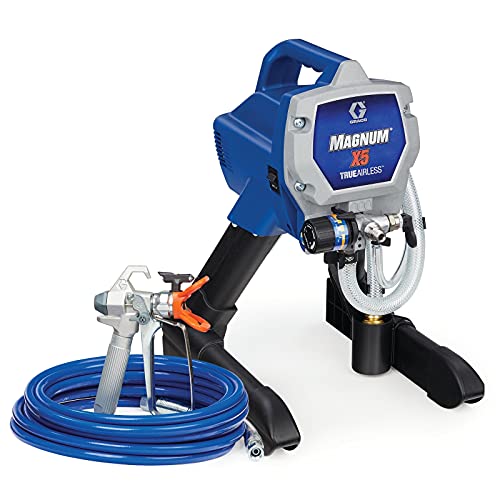
Magnum X5 Airless Paint Sprayer
The most practical all-around sprayer for DIYers who need speed, full-viscosity latex support, and enough hose reach for real home projects.
Pros
- Handles full-viscosity latex paint
- Good speed for fences, rooms, and siding
- Draws from 1-gallon or 5-gallon paint containers
Cons
- Requires careful masking
- More cleanup than a roller
- Overkill for one small furniture piece
As an Amazon Associate we earn from qualifying purchases. Check Amazon for current price and availability.
Best For / Avoid If
| Situation | Best choice | Avoid if |
|---|---|---|
| Whole rooms, fences, decks, siding | Graco Magnum X5 or similar airless sprayer | You cannot mask floors, windows, trim, and nearby surfaces thoroughly |
| Cabinets, trim, furniture | Wagner FLEXiO 590 or another HVLP sprayer | You need to paint a large exterior fast |
| Small crafts and first-time practice | HomeRight Finish Max | You expect a professional cabinet-shop finish without thinning and testing |
| Tight budget under $200 | See our best paint sprayers under $200 | You will spray thick exterior paint weekly |
Use the Paint Calculator before buying paint so you know whether a sprayer’s speed actually matters for your project size.
Types of Paint Sprayers
Before diving into specific models, you need to know which type of sprayer fits your project. If you are unsure whether a sprayer is even the right tool, read our brush vs. roller vs. sprayer comparison first.
HVLP (High Volume Low Pressure)
Best for: Furniture, cabinets, trim, small projects
- Fine finish quality — the low operating pressure (typically 2–10 PSI at the cap) atomizes paint into a tight, soft fan with minimal bounce-back
- Less overspray than airless
- Works best with thinner paints (may need thinning for thick latex)
- Slower than airless for large areas
For a head-to-head breakdown of the top HVLP models, see our Wagner vs. Graco paint sprayer comparison.
Airless Sprayers
Best for: Large exterior surfaces, fences, full room painting
Airless sprayers use a high-pressure hydraulic pump — typically 2,000–3,300 PSI — to force paint through a small carbide tip at high velocity. That pressure does the atomization work, so the sprayer handles full-viscosity latex, elastomerics, and primers straight from the bucket without thinning.
- Fast coverage — most models throw 0.24–0.60 gallons per minute
- More overspray than HVLP; masking is mandatory
- Higher initial cost, but the speed payoff is significant on jobs over 500 sq ft
Gravity-Feed Cup Gun
Best for: Fine finish work, automotive-style finishes, low-volume spraying
- Paint cup sits above the gun, so gravity assists material flow — no siphon tube to prime
- Lower working pressure keeps atomization fine and waste minimal
- Volume is limited to the cup size (600 mL–1 L), making it impractical for whole rooms
Pneumatic (Compressor-Driven) Sprayer
Best for: Professional shops, production finishing, any situation with a compressor already on site
- Requires a separate air compressor with adequate CFM (typically 4–12 CFM at 40–90 PSI depending on the gun)
- Extremely consistent atomization and pattern control
- Higher up-front cost when you factor in the compressor, but the guns themselves are inexpensive and last decades
Handheld Electric Sprayers
Best for: Small projects, touch-ups, beginners
- Affordable ($30–80)
- Easy to use
- Limited capacity and power
Best Sprayers by Category
Best Overall: Graco Magnum X5 (Airless)
Price: ~$280 | Type: Airless
The Graco Magnum X5 is the most popular sprayer on the market for good reason. It handles undiluted latex paint, has a 25-foot spray hose for reach, and is easy to clean. The adjustable pressure knob gives you control for different materials.
- Handles paint directly from a 1-gallon or 5-gallon bucket
- 0.27 GPM flow rate — fast for most projects
- Easy flush cleaning through the garden hose
The X5 is the sweet spot between price and capability. For a typical house exterior (1,500–2,000 sq ft), it will get the job done in a weekend. Go up to the X7 if you’ll be doing larger projects regularly.
Best HVLP: Fuji 2203G Semi-PRO 2
Price: ~$280 | Type: HVLP turbine
Fuji makes the best HVLP sprayers for serious DIYers and professionals. The Semi-PRO 2 produces an ultra-fine finish on cabinets, furniture, and trim. The gravity-feed cup reduces overspray compared to siphon-feed models.
- Pattern control: horizontal, vertical, and round
- Non-bleed spray gun for less overspray when stopped
- Excellent for alkyd and oil-based paints
Best Budget: HomeRight Finish Max
Price: ~$70 | Type: HVLP
For smaller projects and beginners, the HomeRight Finish Max is the best entry-level sprayer. It handles water-based paints well (most latex paints need slight thinning — 10% water) and produces a surprisingly good finish for the price.
- Good for furniture, trim, fences, and small furniture pieces
- Lightweight and easy to maneuver
- Limited to thinner materials
Best for Cabinets: Wagner Spraytech Control Pro 150
Price: ~$100 | Type: HVLP
For kitchen cabinet refinishing specifically, the Wagner Control Pro 150 is an excellent choice. The HEA (High Efficiency Airless) technology reduces overspray by 55% compared to standard airless sprayers, making it much more forgiving in enclosed spaces.
Best Professional: Graco ProX19
Price: ~$500+ | Type: Airless
If you’re painting professionally or doing large exterior projects frequently, the Graco ProX19 is the industry standard. It’s a full professional machine with maximum durability and performance.
Key Settings to Know
Pressure: Start low and increase until you get the pattern you want. More pressure = more material but more overspray.
Spray distance: 8–12 inches from the surface for most applications. Too close = drips. Too far = dry spray (rough texture).
Tip size: Smaller tips (211, 311) for thin materials and fine finishes. Larger tips (415, 515) for thick materials and large coverage.
| Material | Tip Size |
|---|---|
| Lacquer, stain | 209–311 |
| Latex paint, interior | 311–413 |
| Thick exterior paint | 415–519 |
| Elastomeric | 521–625 |
Tip Size Guide (Decimal Inch)
Airless tip codes use a three-digit system: the first digit × 2 = fan width in inches; the last two digits = orifice diameter in thousandths of an inch. The orifice size — the actual hole the paint passes through — is the number that controls atomization quality and material compatibility.
| Orifice Size | Best For |
|---|---|
| 0.011” | Thin stains, lacquers, shellac |
| 0.013”–0.015” | Oil-based paints, alkyd primers, finishing coats |
| 0.017”–0.019” | Latex eggshell and satin — the right choice for most interior home jobs |
| 0.021”–0.025” | Thick latex, exterior flat, heavy-bodied primers |
Using the wrong tip size is the most common cause of sprayer problems. Too small and the pump overworks, creating tails and streaks. Too large and the paint is under-atomized, landing as blobs rather than a smooth film. When in doubt, step down one size and test on cardboard first.
For recommendations on which machines pair best with each tip size at different budget levels, see our best paint sprayers under $200 guide.
Always wear a proper respirator (not just a dust mask) when spraying. Spray mist carries fine particles deep into the lungs. An N95 is minimum; a supplied-air respirator is best for large projects.
A sprayer alone won't paint a house. The accessories below — masking, drop cloths, brush for trim — are required to actually finish the job without overspray disaster.
- GracoMagnum X5 Airless Paint SprayerBest overall airless sprayer for 2,000+ sq ft homes. Reuse for 5+ projects.~Price$329
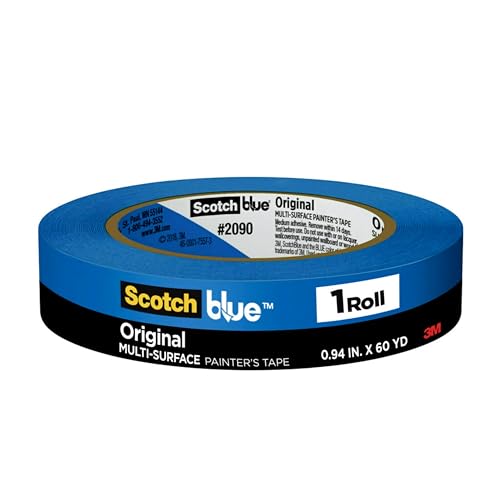 ScotchBlueOriginal Painter's Tape (3-pack)Mask windows, light fixtures, and adjacent surfaces — non-negotiable on big projects.~Price$13
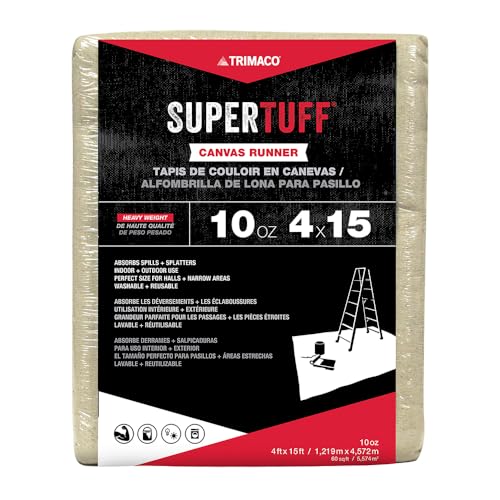 TrimacoSuperTuff 9x12 ft Canvas Drop ClothCanvas grips the floor (plastic slides), absorbs spills, lasts a decade.~Price$26
 PurdyXL Elite Dale Angular 2.5-inch BrushCuts in cleanly, holds plenty of paint, lasts 50+ wash cycles.~Price$20
Affiliate Disclosure: PaintLikePro is reader-supported. When you buy through links on our site, we may earn an affiliate commission at no extra cost to you. Learn more. Prices shown are approximate and reflect the price at publication; check Amazon for current pricing.
Tips for First-Time Sprayer Users
- Test first on cardboard to dial in pressure and pattern
- Keep moving — stopping creates drips and runs
- Overlap 50% on each pass for even coverage
- Mask everything — overspray travels surprisingly far
- Thin if needed — use the viscosity cup test or simply follow the can recommendations
Not sure whether a sprayer is right for your project at all? Our brush vs. roller vs. sprayer breakdown covers when each tool wins and when spraying is overkill.
Frequently Asked Questions
Do I need to thin paint for an airless sprayer?
Most airless sprayers rated at 2,000 PSI or higher can shoot full-viscosity latex straight from the can — no thinning required. The pump generates enough pressure to atomize thick material on its own. Where thinning becomes necessary: HVLP sprayers and lower-power handheld electrics (under ~1,500 PSI) that struggle with heavy-bodied latex. If you are using an HVLP machine, add 10% water to water-based latex and test the spray pattern on cardboard before committing to your surface.
Why is my sprayer spitting?
Spitting — intermittent bursts of paint rather than a smooth fan — almost always traces back to one of three causes: air in the fluid path (check that the intake tube is fully submerged), a worn or damaged tip seat (replace the tip), or a loose packing nut on the gun. On HVLP turbine units, spitting can also indicate that the paint is too thick for the air volume the turbine produces. Thin the material by 5–10% and retest.
How long does it take to clean a sprayer after use?
Plan on 10–20 minutes for a thorough post-use clean. For water-based paints, flush the system with warm water immediately after finishing — do not let paint dry inside the pump or tip. Run clean water through until it exits clear, then follow with a second flush using pump armor or mineral spirits (even for latex) to protect seals during storage. Airless sprayers with a garden-hose flush port (like the Graco Magnum X5) cut this time considerably. Oil-based paints require mineral spirits or paint thinner for the entire flush cycle. For a model-specific look at clean-up, see our Wagner FLEXiO 590 HVLP review.
Home & Outdoor Reviews Editor
Ava Brooks is the Home & Outdoor Reviews Editor. She covers major product categories including tools, furniture, lawn and garden equipment, and practical home accessories. Her goal is to simplify product research with clear comparisons, useful buying guides, and straightforward recommendations for everyday use.
Related Articles
Best Paint Brushes for Every Job (2026 Guide)
A great brush makes painting easier and results better. Here are the best paint brushes for cutting in, trim, furniture, and every painting project.
Best Brush Comb for Cleaning Paint Brushes in 2026
A real brush comb pulls dried paint out of the heel and saves expensive brushes. This guide covers the best comb to buy before your good brush hardens.
Best Brush for Painting Trim Enamel in 2026
Trim enamel needs a brush that stays crisp and releases paint evenly. These picks handle doors, baseboards, and window trim best.