
Best Paint Brushes for Every Job (2026 Guide)
A great brush makes painting easier and results better. Here are the best paint brushes for cutting in, trim, furniture, and every painting project.


Why Your Brush Matters
A quality paint brush is the single best investment for any painting project. A $15 brush applies paint more smoothly, holds more paint per dip, maintains its shape, and lasts for years. A $3 brush sheds bristles into your paint, leaves brush marks, and falls apart after one use.
Types of Paint Brushes
By Bristle Material
Nylon/Polyester Blend — Best for latex (water-based) paint. Most versatile, holds shape under repeated water rinsing, and accepts most modern enamels. The Wooster Silver Tip 2.5” angled sash and the Purdy XL Glide 2.5” both use this blend, which is why they appear in nearly every pro kit.
Pure Nylon — Slightly more durable than blends. Works with all paint types and resists fraying on textured surfaces. A good pick if you tend to brush over rough drywall or stucco.
Natural Bristle (China Bristle) — For oil-based paint, stains, and shellac only. Don’t use with latex — natural bristles absorb water from the paint and go limp within minutes, leaving streaks. The Purdy Black China 2.5” is the standard recommendation when refinishing trim with oil-based enamel.
Ox / Badger Hair — High-end smooth finishes (lacquer, fine furniture). Specialty tool, not for general DIY.
Foam — One-time use for stains, touch-ups, and fine detail with oil or alkyd paint. Tears with latex. Treat as disposable.
How to Match Brush to Job
Pick the brush by what edge or surface you’re hitting, not by brand:
- Cutting in walls — 2.5” angled sash. The angle keeps a clean line at the ceiling and along trim, and 2.5” carries enough paint to do a six-foot run without reloading.
- Trim and baseboards — 2” angled sash. Smaller, more controllable for narrow profiles. See our guide on painting trim and baseboards.
- Doors and large flat panels — 3” or 4” flat. Lays paint down faster than a sash and avoids brush marks across a wide surface.
- Detail and touch-ups — 1” angled. For window mullions, switch plates, and corners no roller can reach.
- Cabinets — 2.5” oval or fine-tip flat. Oval-cut bristles flex into corners on shaker doors without leaving a hard edge.
For technique on the most common task — cutting in — see how to cut in like a pro. And if you’re unsure whether brush, roller, or sprayer is the right tool for your project, our brush vs roller vs sprayer breakdown walks through it.
By Shape
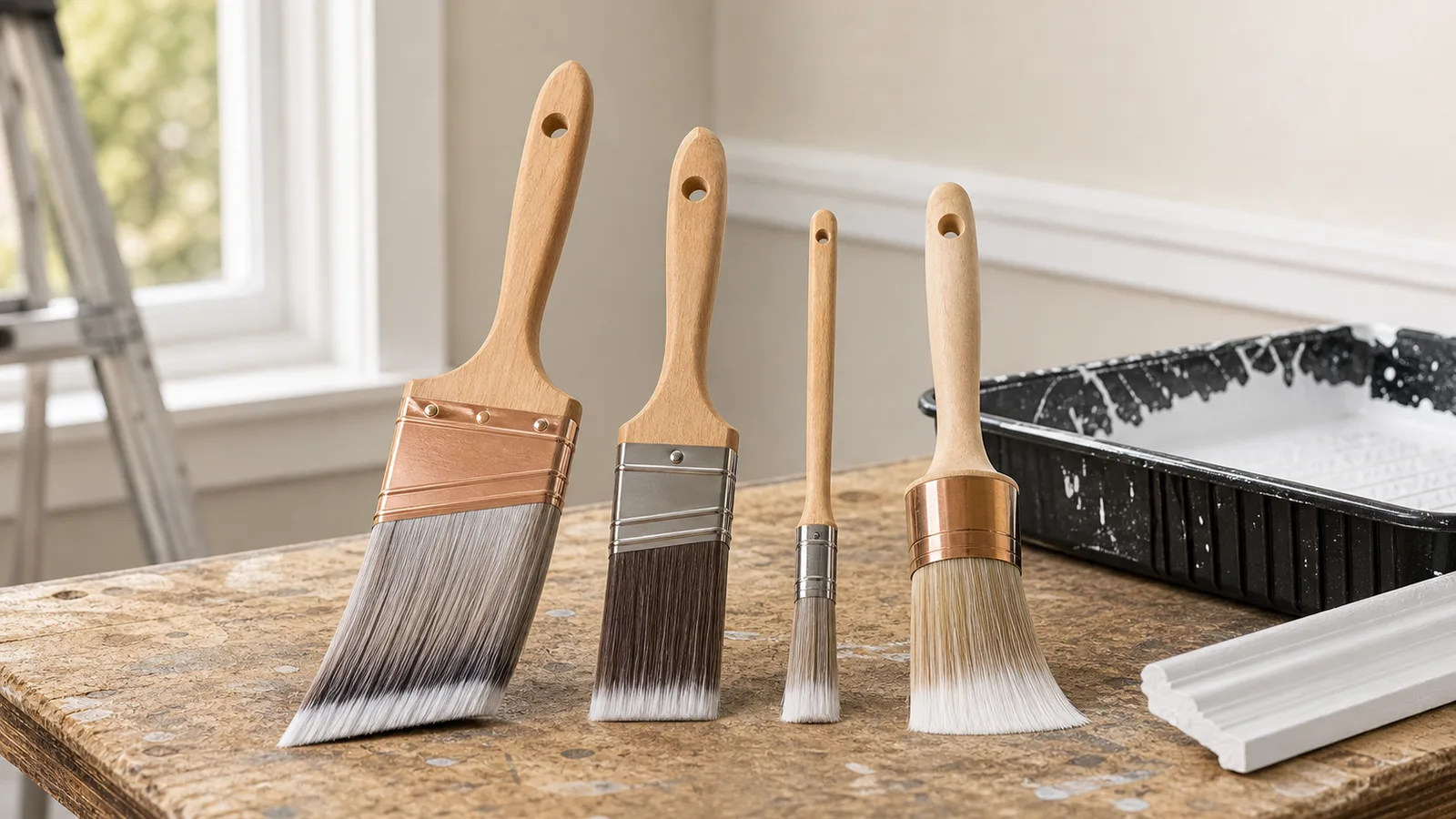
Angled Sash — The most important brush. Used for cutting in edges, painting trim, and detail work. The angle creates a natural line.
Flat/Straight — Good for large flat surfaces like doors, shelves, and panels.
Round — For specialty work, tight corners, and touch-ups.
Our Top Picks
Best Overall: Purdy XL Glide (2.5”)
The industry standard for a reason. Smooth application, excellent edge control, easy to clean, and lasts for hundreds of uses.
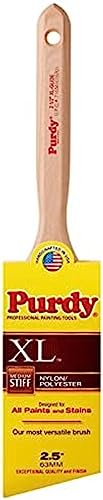
Pros
- Exceptional edge control
- Holds paint well
- Easy to clean
- Lasts for years
Cons
- Premium price
- Needs break-in period
As an Amazon Associate we earn from qualifying purchases. Check Amazon for current price and availability.
Best Budget: Wooster Silver Tip (2.5”)
Nearly as good as the Purdy at a lower price. Great for DIYers who want quality without breaking the bank.
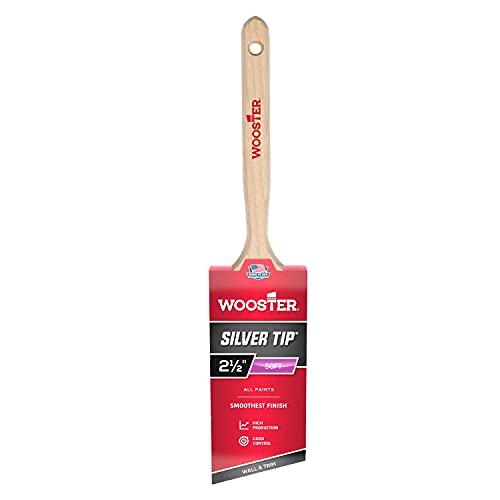
Pros
- Great value
- Smooth finish
- Good for beginners
Cons
- Wears faster than Purdy
- Slightly less precise
As an Amazon Associate we earn from qualifying purchases. Check Amazon for current price and availability.
Best for Trim: Purdy Clearcut Elite (2”)
Smaller size gives incredible control for detailed trim work. The stiff bristles handle semi-gloss and gloss paints beautifully.
Best Brush Set: Wooster Shortcut 3-Pack
Includes 1”, 1.5”, and 2” angled brushes. Perfect for a variety of detail work and touch-ups.
How to Care for Your Brushes
Clean Immediately After Use
Never let paint dry on a brush. For latex paint, rinse under warm running water while working paint out with your fingers. For oil-based, use mineral spirits.
Deep Clean
After rinsing, work a drop of dish soap through the bristles. Rinse until water runs clear. This removes paint from deep in the ferrule.
Reshape and Dry
Reshape the bristles with your fingers. Hang the brush or lay it flat to dry — never stand it on its bristles.
Store Properly
Once dry, slide the brush back into its original keeper (the cardboard sleeve). This maintains the brush shape between uses.
A well-maintained quality brush will last 10+ years. The key is cleaning it immediately after every use — even 30 minutes of dried paint significantly shortens a brush’s life.
How Many Brushes Do You Need?
For a typical room painting project:
- 1 angled sash brush (2.5”) — for cutting in walls
- 1 flat brush (3”) — for trim and doors
For a whole-house project, add:
- 1 small angled brush (1.5-2”) — for detail work
- 1 wide brush (4”) — for large surfaces
For deeper testing notes on the Purdy XL Glide’s larger sibling, see our Purdy XL Elite Dale 2.5” review — the same handle family, different bristle blend, different ideal paint type.
Frequently Asked Questions
Why does my new brush shed bristles? Even quality brushes shed loose hairs on the first one or two uses. Before you load paint, run the bristles between your thumb and forefinger to pull out the loose ones, then “spin” the handle between your palms over a trash can to fling out the rest. Skipping this step is the most common reason people see bristle hairs stuck in their finish coat.
Is it worth buying a $20 brush over a $5 brush? For latex paint on interior walls, yes. A $20 angled sash like the Purdy XL Glide will outlast ten $5 brushes, holds more paint per dip (so you reload less), gives a cleaner cut at the ceiling, and cleans up in 90 seconds. The math works out as soon as you’re past the second room. The exception is single-use jobs (one accent wall, then done) — for those, a budget brush is fine.
Can I use the same brush for primer and topcoat? Yes, as long as both paints are the same chemistry (both latex, or both oil). Wash thoroughly between the primer and topcoat — primer leaves a thicker residue than finish paint and dried bits can transfer to your finish coat.
How long does a quality brush last? With proper care — clean immediately, reshape, store in the keeper — a Purdy or Wooster will go ten years and hundreds of uses. The most common kill mode is dried paint at the base of the bristles (the ferrule), which makes the brush stiff and uneven. Five extra minutes cleaning saves the brush.
Home & Outdoor Reviews Editor
Ava Brooks is the Home & Outdoor Reviews Editor. She covers major product categories including tools, furniture, lawn and garden equipment, and practical home accessories. Her goal is to simplify product research with clear comparisons, useful buying guides, and straightforward recommendations for everyday use.
Related Articles
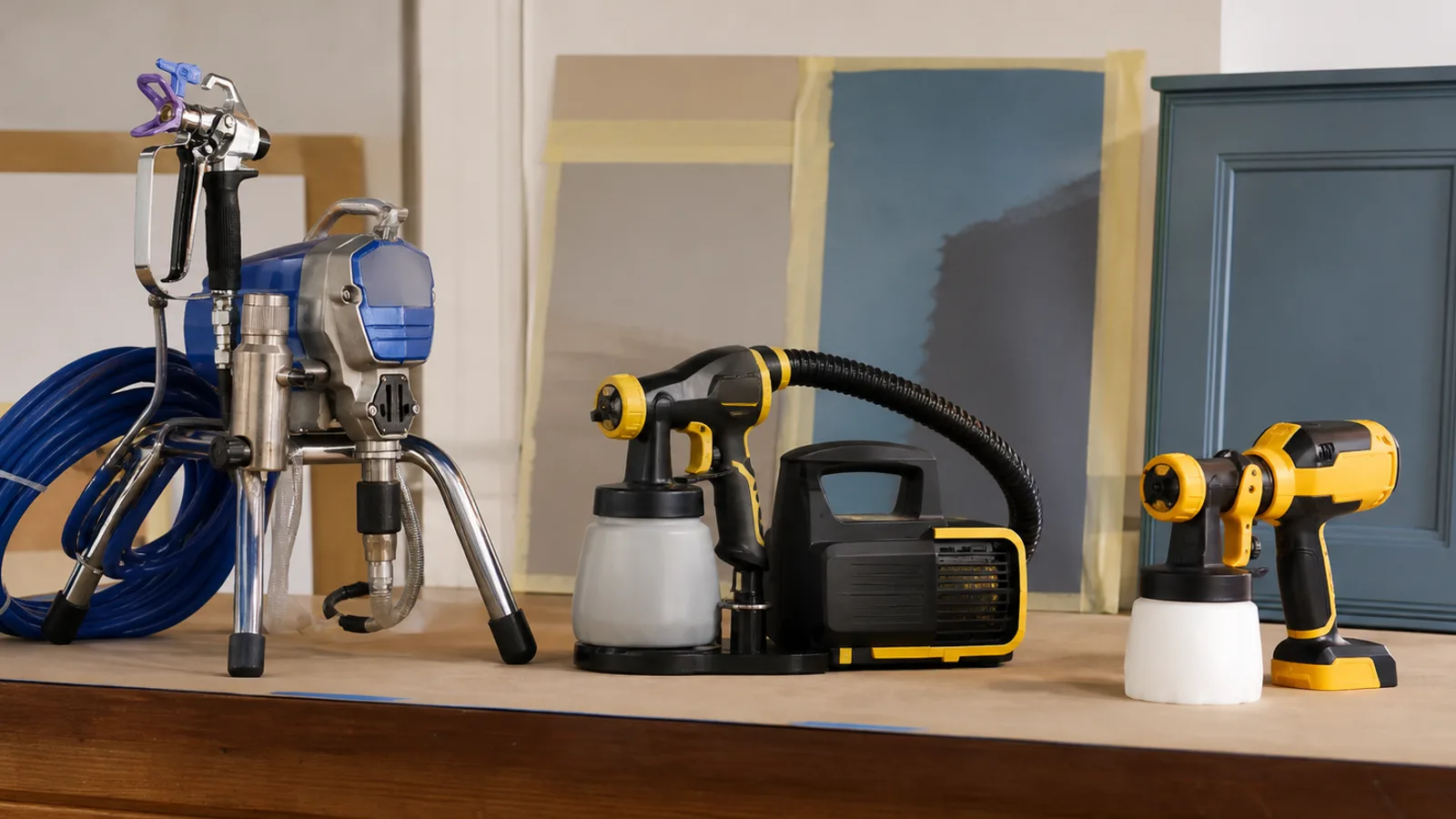
Best Paint Sprayers in 2026: HVLP and Airless Picks
Compare the best paint sprayers for cabinets, furniture, fences, rooms, and exterior paint jobs, with clear picks by project type and budget.
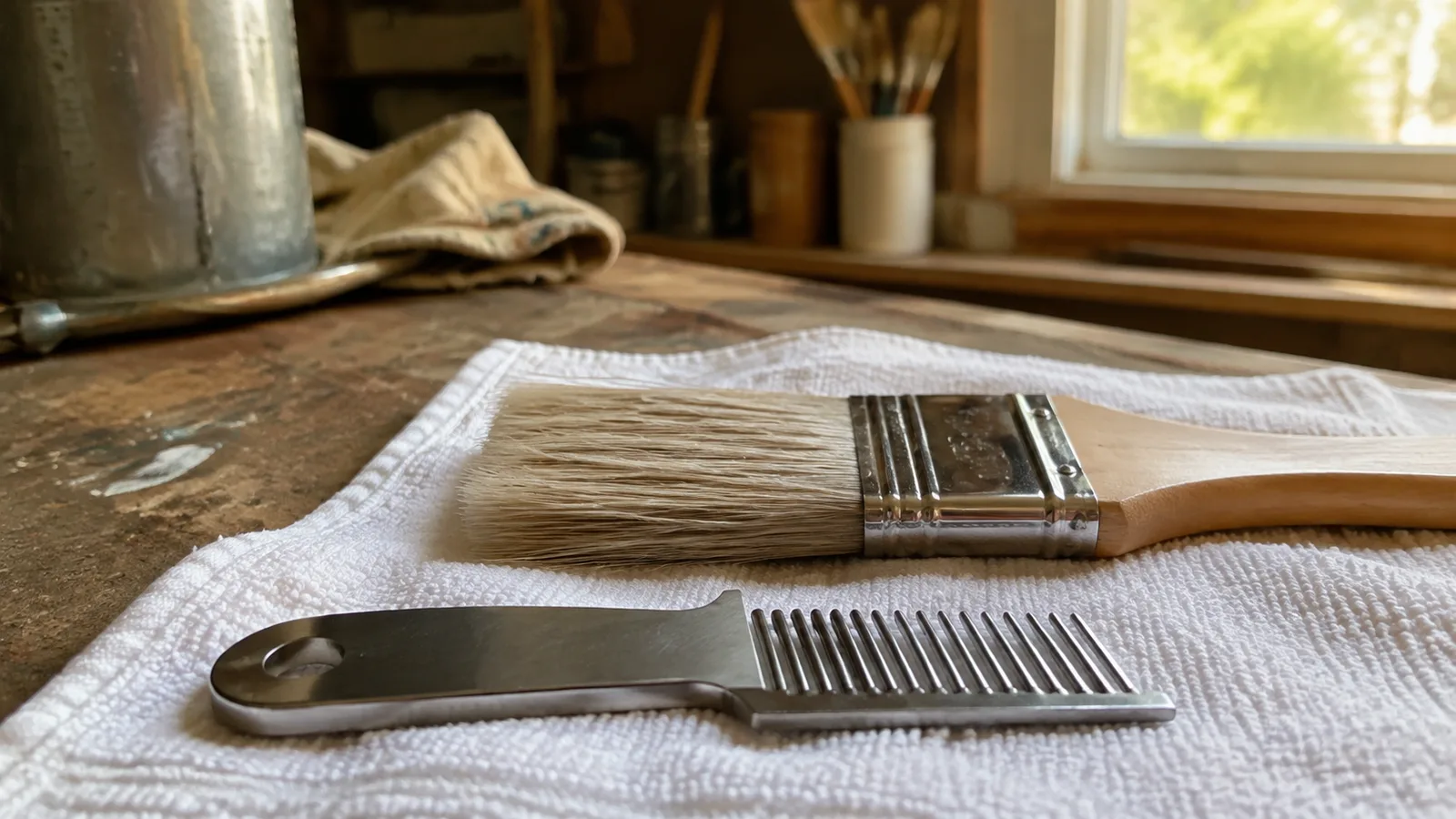
Best Brush Comb for Cleaning Paint Brushes in 2026
A real brush comb pulls dried paint out of the heel and saves expensive brushes. This guide covers the best comb to buy before your good brush hardens.
Best Brush for Painting Trim Enamel in 2026
Trim enamel needs a brush that stays crisp and releases paint evenly. These picks handle doors, baseboards, and window trim best.